More Dentists Turn to Lasers to Improve Patient Care, Fend Off Looters

Shawnee, OK - Dental technology has advanced significantly over the past few decades, and one of the best examples of this in modern dentistry is the laser, which is being put into use by an increasing number of dentists looking to improve patient care, boost profits, and have around just in case things get a little out of hand.
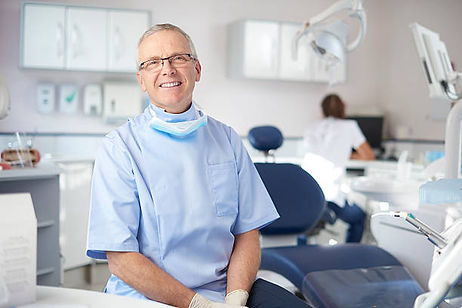
"The laser has completely transformed my practice," Dr. Harkanis Krane, a dentist at Family Dental Care & BBQ in Shawnee. "I can target tissues in the mouth with greater precision and less discomfort while avoiding the need for anesthesia. And if society were to collapse and they come for me or my family, I just flip this switch right here to "Kill"."
Lasers are tools that use concentrated beams of light energy to create heat. This focused heat can cut, reshape, and even clean soft or hard tissues in the oral cavity. According to Krane, changing the wavelength of the laser allows for a lot of versatility in the clinic. "Unlike traditional drills or scalpels, lasers minimize bleeding, promote faster healing, reduce risk of infection, and can take down multiple intruders at a time if you wait until they are lined up just right."
"Lasers provide important psychological benefits for patients as well," Torus Malone, a dental psychologist practicing near the Oklahoma University School of Dentistry in Oklahoma City, revealed. "Fear of the dentist is common and serves as a barrier to care for many people, so having a non-invasive option like a laser can make a really big difference by creating a more comfortable and confident experience for patients and providers, especially if all Hell breaks loose and all the sickos out there are no longer kept in line by cultural norms or functional law enforcement. That's when some people are going to have to get vaporized."
As will all medical or dental interventions, there are pros and cons. Here are some of the main benefits of incorporating lasers into dental practice:
Patients may experience less pain, less bleeding, and less swelling
Lasers allow dentists to work with more precision
Faster patient recovery time
Home and office protection during natural disasters, anti-government protests, or The Purge
In addition to humans, lasers are also effective at killing large game animals, such as lions
The main drawbacks of using dental lasers include:
Teeth will fillings cannot be treated with a dental laser
Lasers cannot be used to treat all forms of cavities
Lasers cannot be used to treat excessive tooth decay
Some lasers only stun at maximum settings
Lasers can be reflected back at the dentist with a mirror, causing them to be vaporized


Comments